Barbara Leigh Smith Bodichon (1827–1891) stands as one of the most intellectually robust, financially independent, and strategically pivotal figures in 19th-century British feminism. While her name may not be as immediately recognizable to the modern public as those who spearheaded the militant suffrage campaign a generation later—such as Emmeline Pankhurst. Barbara Bodichon was arguably the essential foundational architect of the Victorian women’s movement. Her work laid the intellectual, organizational, and political groundwork for almost every major reform achieved in the latter half of the century. From property rights and access to education to the eventual right to vote. She was a woman whose personal freedom—unconventional independence and inherited wealth—became a powerful lever for the collective emancipation of her sex.
Bodichon’s life and tireless campaigning were characterized by a commitment to systematic legal and educational reform. Connecting a diverse and often fractious group of pioneering women into a unified force. Her greatest legacy lies in her role as a convener, a strategist, and an enduring source of financial and moral support. For a movement that was often met with ridicule and legal oppression. Interconnecting her life story with the parallel and subsequent work of figures like Bessie Rayner Parkes, Millicent Fawcett, and Emily Davies reveals how Bodichon’s early, uncompromising campaigns provided the bedrock for the later, more visible triumphs of the suffrage movement.
Barbara Leigh Smith’s upbringing was profoundly unconventional. Providing her with the financial and intellectual independence that became the engine of her activism. She was the illegitimate daughter of wealthy Whig Member of Parliament, Benjamin Leigh Smith, and Anne Longden, a milliner. While such a parentage often resulted in social stigma, Benjamin Leigh Smith not only acknowledged his five children but ensured their financial security and granted them a remarkably progressive education.
Upon turning 21, Barbara Bodichon inherited a substantial, independent income. Her father stipulated it was to be managed free from male control—a rarity in Victorian England. This independent wealth was arguably the single most important factor enabling her activism. It allowed her to travel freely, fund political campaigns, establish institutions, and live according to her principles. Without needing to secure a husband for financial support, or to seek permission for her political pursuits.
This personal freedom made her acutely aware of the legal and financial servitude imposed upon other women. Particularly those who married. In Victorian common law, the doctrine of coverture dictated that a woman’s legal identity was subsumed by her husband upon marriage. As legal theorist William Blackstone summarized,
"The very being or legal existence of the woman is suspended during the marriage, or at least is incorporated and consolidated into that of the husband."
This meant a married woman could not own property, keep her wages, sue or be sued, or enter into contracts. Her husband had legal rights over her earnings and her children.
Bodichon’s first major campaign was a direct attack on coverture. Recognizing the legal vulnerability of married women. Especially those of the working and middle classes whose livelihoods could be seized by an errant or abusive husband. She published her pivotal 1854 pamphlet, A Brief Summary of the Laws of England concerning Women. This accessible, non-polemical document laid out the harsh legal realities of married women's property rights. Giving the burgeoning movement a clear, actionable reform target.
In 1855, Barbara Bodichon, alongside her close friend and fellow activist, Bessie Rayner Parkes (1829–1925), formed the Married Women's Property Committee. Parkes, herself a tireless campaigner and writer, provided the literary and editorial strength to complement Bodichon’s organizational and financial power. Together, they gathered over 26,000 signatures on petitions calling for reform. Engaging famous figures like Elizabeth Barrett Browning and Charles Dickens.
This campaign, sustained over two decades. Eventually culminated in the passage of the Married Women's Property Act of 1870 and the more comprehensive Act of 1882. These laws dismantled coverture and granted married women the right to own, buy, and sell property. Also to control their own wages, and protect themselves and their children from feckless husbands. This foundational legal achievement was crucial. It not only offered financial justice but established women's right to independent legal personhood. A prerequisite for demanding the political right to vote.
The interconnectivity between Bodichon and Parkes was formalized through the establishment of the Langham Place Circle in the late 1850s. These were a group of influential female reformers who met at Bodichon’s London home. This circle became the nerve centre of early British feminism. Central to their work was the founding of The English Woman’s Journal (1858–1864) by Parkes and Bodichon. Financed by Bodichon, the Journal was the first feminist periodical. Providing a platform for discussing women’s rights, employment, education, and suffrage. It served as a vital mechanism for networking, coordinating national campaigns, and disseminating feminist ideas to a respectable Victorian audience. It was through the Journal and the Langham Place Circle that almost all subsequent leaders of the women’s movement were first inspired or recruited.
Concurrent with her legal activism, Bodichon dedicated immense energy and resources to another essential component of women’s emancipation: access to high-quality education and professional employment. She recognized that without the economic means to support themselves, women would remain dependent on marriage, regardless of any property laws.
Following the establishment of the English Woman’s Journal, the Langham Place Circle quickly turned its attention to the crippling lack of professional opportunity for women outside of domestic service or governess roles. This led to the creation of the Society for Promoting the Employment of Women (SPEW) in 1859.
SPEW was groundbreaking in its practicality. It acted as an employment agency and sought to challenge male monopolies in certain trades. By offering training in non-traditional fields like printing, bookkeeping, and clerical work. It was a tangible solution to the problem. Funded by Bodichon and fueled by the dedication of reformers who recognized that true independence required an income.
Bodichon’s deepest and most enduring contribution to educational reform was her partnership with Emily Davies (1830–1921), a fellow member of the Langham Place Circle and a fierce intellectual. Davies was convinced that women deserved access to university education equivalent to that offered to men, without dilution or separate standards.
Together, Bodichon and Davies campaigned relentlessly, starting with the admission of girls to local examinations and culminating in the founding of Girton College, Cambridge. Bodichon, with her characteristic generosity, served as a principal funder and provided crucial organizational support for the venture.
Emily Davies’s Uncompromising Vision: Davies was adamant that a university for women should be in close proximity to a male university. Should offer the exact same curriculum and examinations. Arguing that anything less would perpetuate the notion of female intellectual inferiority. Girton, established in 1869, was a direct realization of this goal.
Bodichon's Financial and Political Support: Bodichon’s money and network ensured the college's survival in its early, precarious years. She served on the Executive Committee and remained a devoted advocate.
Girton College was a radical departure from the finishing schools that defined female education. By providing women with the opportunity to pursue degrees in rigorous subjects like mathematics, classics, and science, Bodichon and Davies ensured that women could compete for professional roles and contribute intellectually to public life. The success of Girton became a powerful argument for both the intellectual capacity of women and the necessity of granting them political rights.
Having secured legal and educational foundations, Bodichon shifted her focus to political reform, recognizing that the only way to safeguard existing gains and achieve full equality was through the parliamentary franchise.
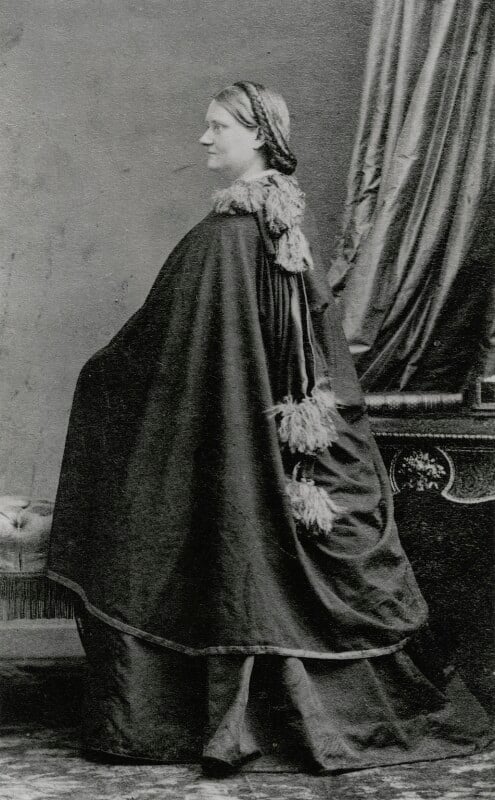
The pivotal moment for the organized suffrage movement occurred in 1866. Bodichon and Davies, along with a committee of other activists, drew up a petition demanding the right to vote for women, presenting it to Parliament. The petition contained 1,499 signatures and was famously introduced in the House of Commons by philosopher and MP John Stuart Mill.
Following the initial excitement and debate generated by Mill's proposal, the first dedicated organization, the Kensington Society, was formed. Soon after, in late 1866, the London National Society for Women’s Suffrage (LNSWS) was established, with Bodichon playing a foundational role. She and her colleagues were instrumental in unifying the geographically scattered suffrage groups that sprang up across the country into a coherent, national movement.
Bodichon’s work was essential for mentoring and supporting the next generation of women's suffrage leaders who would carry the movement forward for the next five decades:
Millicent Garrett Fawcett (1847–1929): Millicent Fawcett, a tireless campaigner, entered the suffrage movement in the mid-1860s and was directly mentored by the Langham Place pioneers. She attended the early suffrage meetings organized by Bodichon and her circle. Fawcett would later become the leader of the constitutional (non-militant) suffrage movement—the National Union of Women's Suffrage Societies (NUWSS)—guiding it with strategic patience from 1890 until 1919. Bodichon’s early lobbying and organizational framework provided Fawcett with the institutional base and the list of foundational arguments she would employ throughout her long career. Fawcett’s lifelong commitment to constitutional reform was a direct continuation of the respectful, intellectual, and systematic approach established by Bodichon.
Lydia Becker (1827–1890): Lydia Becker, a key organizer from Manchester, worked closely with Bodichon in the 1870s and became a highly effective public speaker and editor of the Women's Suffrage Journal. While they occasionally differed on strategy (Becker focused more on the legal arguments related to the wording of the electoral statutes), their collaboration solidified the national reach of the early movement. Bodichon provided the initial impetus and financial resources, allowing regional leaders like Becker to mobilize support outside of London.
The movement launched by Barbara Bodichon and her colleagues was inherently constitutionalist. They focused on respectful lobbying, organizing petitions, hosting public debates, and working with sympathetic MPs. This constitutional approach, which prioritized education and persuasion within the existing political system, was the only viable strategy in the 1860s and 70s. This tradition was later inherited by Fawcett’s NUWSS, contrasting sharply with the militant tactics adopted by the Pankhursts' Women’s Social and Political Union (WSPU) after 1903. Bodichon's vision was one of gradual, irreversible, legal change, built on solid intellectual foundations, rather than dramatic confrontation.
In 1857, Barbara Leigh Smith married Dr. Eugène Bodichon, a French physician and anti-slavery advocate. While she took his name, her marriage was as unconventional as her life. She maintained her independent finances and property, and spent much of her time living apart from her husband, dividing her year between her home in Hastings, London, and Algeria, where her husband maintained a practice. This arrangement was a powerful, living example of the freedom she fought for.
Throughout her life, Barbara Bodichon’s was also a dedicated and talented professional artist. She trained at the Central School of Design. Uniquely for a woman of her time, established her own painting studio. Her landscapes were highly regarded and she exhibited frequently, including at the prestigious Royal Academy.
Her art was not merely a hobby; it was an integral part of her feminism. It demonstrated that women were capable of professional excellence and financial independence through creative labour. The discipline required for her art mirrored the discipline she applied to her political work. She saw the pursuit of professional distinction in any field. Be it painting, medicine, or law—as a necessary part of women’s right to full human expression.
Though Barbara Bodichon died in 1891, before the emergence of the militant WSPU, her influence reached directly into that generation.
Emmeline Pankhurst (1858–1928): Emmeline Pankhurst, the iconic leader of the WSPU, grew up immersed in the early suffrage movement. Her parents, Robert and Sophia Pankhurst, were active in the Manchester suffrage circle, often collaborating with Lydia Becker. The earliest political consciousness of Emmeline was nurtured in the environment created by the very activists—Becker, Davies, and Bodichon—who founded the organized movement. The constitutional work of the 1860s provided the political scaffolding and the legal victories (like the Married Women's Property Acts) that the militants later built upon. The WSPU's tactics were a response to the stagnation of the constitutional efforts, but their foundational goals were the same as those articulated by Bodichon three decades earlier.
The Chain of Influence: Bodichon’s work on property rights and education fundamentally changed the legal status of women, giving the later suffragists a much stronger claim to political rights. It is difficult to imagine a successful suffrage movement without the pre-existing fact of women owning property and earning university degrees. Bodichon created the "New Woman"—the financially independent, educated woman—for whom the vote became a logical and inevitable necessity.
Barbara Bodichon utilized her unique privileges—wealth, progressive parenting, and sheer force of will—to establish the institutional and legal basis of organized feminism in Britain. She did not seek the spotlight or the drama of later political agitation, but preferred the methodical, long-term work of legal and educational reform.
Her lasting legacy rests on three intertwined pillars:
The Married Women’s Property Acts: Granting economic independence and legal personhood.
The Foundational Suffrage Societies: Launching the organized political demand for the vote.
The Founding of Girton College: Proving women's intellectual equality.
She was the indispensable pioneer who ensured that when the next generation, including Fawcett and the Pankhursts, took up the banner of suffrage, they inherited a movement that was already respected, organized, and resting on a secure foundation of legal and educational victories. It was the uncompromising path of Barbara Leigh Bodichon that cleared the ground for the fields of opportunity that future generations of women would finally reap.
