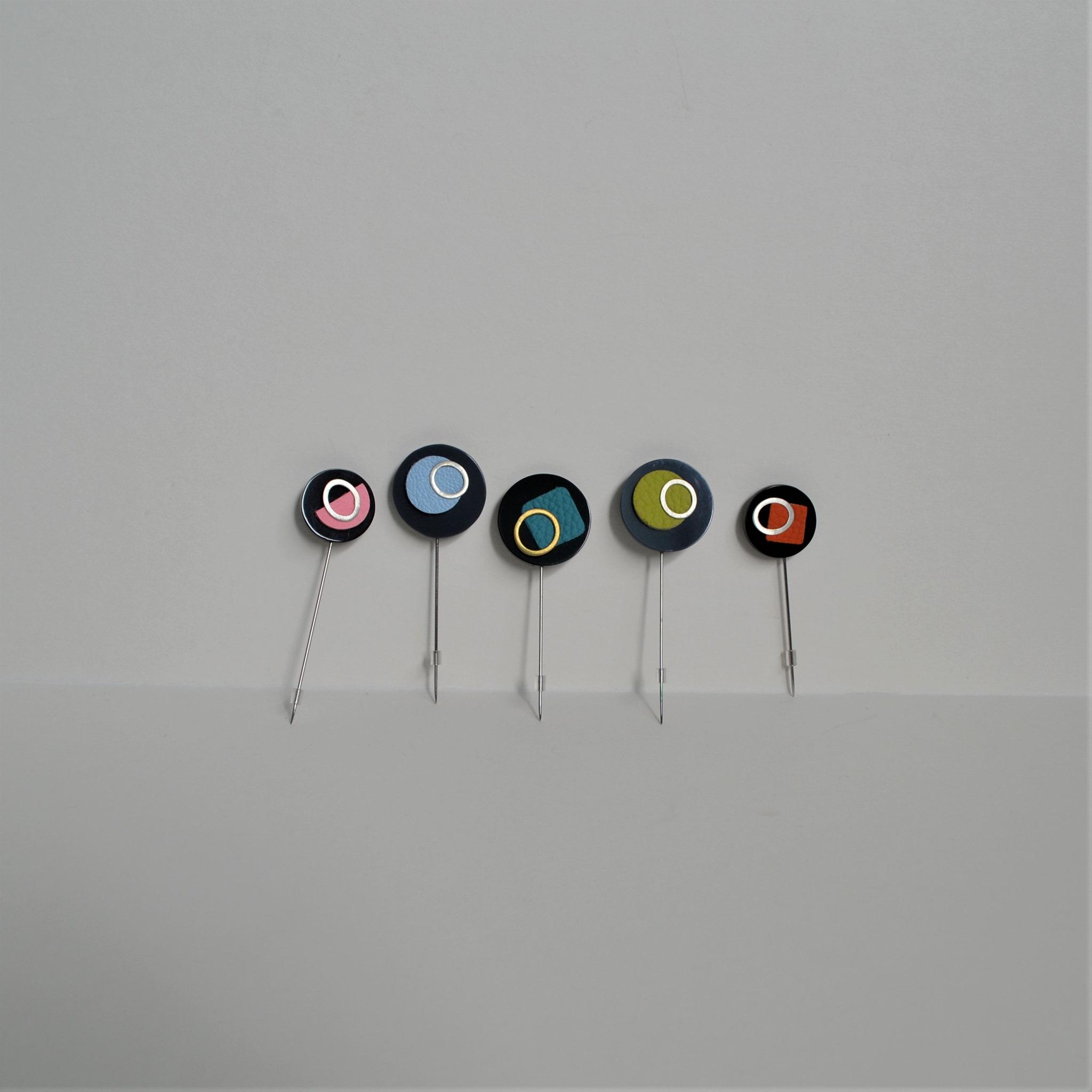
Aubin Jewellery, the creative enterprise of artist Aubin Stewart, exists as a profound critique and radical reinvention of the world of fine craft. Operating outside the conventional boundaries of precious metals and inherited value, Stewart’s work is a masterclass in Conceptual Materiality, arguing that the true worth of an object lies not in its scarcity or price, but in its narrative, its history, and its ethical transformation. Her practice is built upon the foundational pillars of upcycling, repurposing, and reclaiming, elevating the discarded detritus of modern life—from rubber and driftwood to old trainers and costume jewellery—into exquisite, often minimal, wearable art.
It is not merely about making beautiful things; it is about redefining what makes an object precious in the contemporary context of ecological and consumer excess.
Traditional jewellery derives its value from the perceived permanence and scarcity of its materials—gold, platinum, and mined gemstones. This system often ignores the environmental and humanitarian costs associated with material extraction. Aubin Stewart’s practice launches a direct conceptual challenge to this status quo by embracing materials that have zero market value, forcing the audience to ascribe value based solely on artistic transformation and conceptual meaning.
The use of re-purposed footwear, specifically old trainers, in collections such as ‘Matter,’ is perhaps the most forceful illustration of this radical revaluation. Trainers are the epitome of fast-consumer culture: mass-produced, worn out, and quickly discarded, contributing massively to landfill waste. By meticulously dissecting and reconfiguring these worn soles, plastics, and fabrics alongside small amounts of traditional materials like ashwood, steel, and cultured pearls, Stewart performs a kind of alchemical reversal.
The trainer is transformed from an object of transient utility into a piece of enduring, conceptual art. The final brooch or necklace retains a ghostly memory of its former life—a faint texture, a specific colour block—but now possesses a new permanence. This process embeds a critique of consumer waste directly into the object, asking the wearer to consider the material footprint of the objects they choose to adorn themselves with.
The mentioned involvement in the “Radical Jewellery Makeover Project” further solidifies this activist stance. This project, which seeks to deconstruct and re-contextualize mass-produced, low-value costume jewellery, reveals Stewart’s dedication to a circular, anti-consumerist methodology. Costume jewellery, often made from cheap plastics and base metals, embodies the aesthetic of desire without the material value of heritage.
By taking these objects, dismantling them, and integrating their fragments with materials like Perspex, leather, brass, and aluminium, Stewart demonstrates a vital skill: the reclamation of aesthetic potential from the economically defunct. It transforms a process of consumption (buying a cheap necklace) into a practice of creation (making a complex, narrative brooch).
The material value is thus supplanted by conceptual value, where the price is derived from the artist's labour, vision, and the embedded story of the material’s second life, rather than the commodity market price of its components.
Stewart’s material choices are deeply intertwined with the theme of provenance—the origin and history of the object. Her work is a documentation of a specific geography and a deliberate act of seeking out materials that carry a sense of place.
Collections like ‘Drift’ are a direct result of the artist's environment. The incorporation of materials like driftwood, rubber, stone, and brass reflects a practice of beachcombing—a form of artistic research where the coast of Scotland (specifically referencing hauls from Inverbervie) serves as a boundless, unsorted studio.
The driftwood and stones carry the narrative of the sea and the shore, their shapes determined by natural forces. The black rubber rings, often industrial or nautical detritus washed ashore, carry the narrative of human interaction with the ocean. By juxtaposing the soft, organic forms of the driftwood with the stark, industrial lines of the metal and the resilient blackness of the reclaimed rubber, Stewart creates a dynamic dialogue about nature, industry, and decay. The final pieces, like the Drift Necklace, are tactile, raw, and possess a geological honesty rarely found in traditional jewellery. They honour the random, beautiful geometries of the found object.
The technical challenge of Aubin Jewellery lies in the very nature of its materials. Working with non-traditional, heterogeneous components—combining porous, weathered wood with rigid Perspex, or bonding complex polymer shoe materials with refined brass—requires a unique and highly developed skill set. The fabrication process is an act of technical reconciliation, forcing disparate materials to coexist in a refined aesthetic state.
The work with Perspex, Brass, and Aluminium often allows for the creation of clean, modular forms that contrast with the organic or worn-out nature of the repurposed components. This aesthetic tension is central to her style. She often uses these clean materials to frame or isolate the found object, drawing attention to its texture and history.
While the conceptual pieces rely heavily on narrative and texture, the ‘Bord’ Collection demonstrates Stewart's mastery of minimalist aesthetics and colour theory. Described as "super minimal with solid colour blocking" and a "limited colour palette," this collection shows a refinement of form.
These pieces—often featuring block colours like Soft Lilac + Berry or Orange—distill the complexities of the conceptual work into pure, wearable design. This contrast reveals the breadth of Stewart’s artistic vision: she can celebrate the rough history of a found object in one collection and, in the next, use refined geometry and colour to focus on the elegance of clean form. It is the sophisticated use of colour and shape that allows the underlying radical material choices to be aesthetically accepted into the realm of wearable art.
Aubin Stewart's commitment to her craft extends beyond her studio bench into her role as an educator and community facilitator. This dual function—maker and teacher—is essential to the philosophy of Aubin Jewellery, which seeks to demystify creative practices and promote material literacy.
Stewart holds a teaching job (mentioned at Grays School of Art in Aberdeen), positioning her to influence the next generation of designers and craftspeople. This institutional role allows her to advocate for material experimentation and sustainable practices within formal education, challenging students to think beyond the limits of traditional precious materials.
Her teaching is often conceptual, promoting a philosophy that material constraint can lead to creative freedom. By encouraging students to question where their materials come from and where they ultimately go, she instills a design conscience that is vital for future sustainable industry.
Stewart actively runs workshops (e.g., Paper Wall Hanging Workshop, Paper Mobile Workshop) that focus on accessible, low-tech, and often upcycled materials. These events are crucial for democratizing the act of making. They strip away the intimidation of expensive tools and rare materials, allowing the community to engage directly with the creative process.
The workshops teach conceptual thinking and assembly skills using everyday objects, embodying the very spirit of her jewellery: that artistic transformation is available to everyone, and that creativity is a skill, not a secret. By hosting these sessions at local hubs like Deemouth Artist Studios, she strengthens the local artisan economy and fosters a sense of creative community.
The presence of Aubin Jewellery in local Scottish galleries and retail spaces—Aberdeen Art Gallery, Edit Aberdeen, Fold Banchory, and Kist Dundee—underscores a deep commitment to the local artisan economy. By choosing to showcase her work in regional venues and participating in local markets and exhibitions (such as HARVEST), Stewart supports a sustainable ecosystem for craft. This model stands in contrast to the global, anonymous supply chain, emphasizing the provenance, locality, and personal narrative behind the work. Her regular updates about exhibition preparations and market appearances illustrate the continuous dialogue she maintains with her immediate artistic community and customer base.
The ultimate significance of Aubin Jewellery is its function as activist art—wearable pieces that carry a profound social and environmental conscience. The materials she uses are not just aesthetic choices; they are ethical imperatives driven by the reality of planetary waste.
The question posed in one of her posts—
"Could I really make jewellery from plant pots???"
—is rhetorical and highly revealing. It highlights a core investigative thrust in her work: how to intercept materials destined for landfill and assign them a new cultural permanence. Footwear and plastic items like plant pots represent billions of tons of non-biodegradable waste.
By diverting and transforming this waste, Aubin Jewellery serves as a micro-scale waste management solution and a macro-scale social commentary. Wearing a piece of her jewellery becomes a subtle but powerful act of alignment with this environmental consciousness. It is a commitment to a different set of values than those promoted by the mass-market jewellery industry, whose material supply chains are often fraught with ethical complexities.
Aubin Stewart’s work proposes a fundamental shift in the definition of preciousness. It moves away from the inherent value of Mined-Earth materials (gold, diamonds) and towards the inherent value of Reclaimed-Earth materials. The objects gain a moral sheen based on their contribution to a circular economy and their ability to document a contemporary social issue.
Her jewellery provides a blueprint for a future craft economy that is sustainable, ethical, and intellectually challenging. It proves that artistic integrity and environmental responsibility can be fused into a practice that is commercially viable and critically relevant. The pieces are beautiful because they are well-made, but they are precious because of the stories they tell—stories of transformation, reclamation, and the resilience of human creativity in the face of material excess.
Aubin Jewellery is a complete artistic statement that functions as a gallery, a workshop, and a manifesto. Through the radical practice of upcycling discarded matter—from the textures of driftwood and reclaimed rubber to the complexity of repurposed footwear—Aubin Stewart challenges the centuries-old conventions of what jewellery is and what it should value.
Her work is defined by the sophisticated aesthetic created through the juxtaposition of the raw and the refined, and it is sustained by a pedagogical commitment to sharing the creative process with the community. Aubin Jewellery successfully redefines preciousness, proving that the most valuable materials are those imbued with narrative, ethical purpose, and the artist's transformative vision. In doing so, she establishes a powerful model for a sustainable, conceptual, and enduring wearable art practice for the 21st century.
