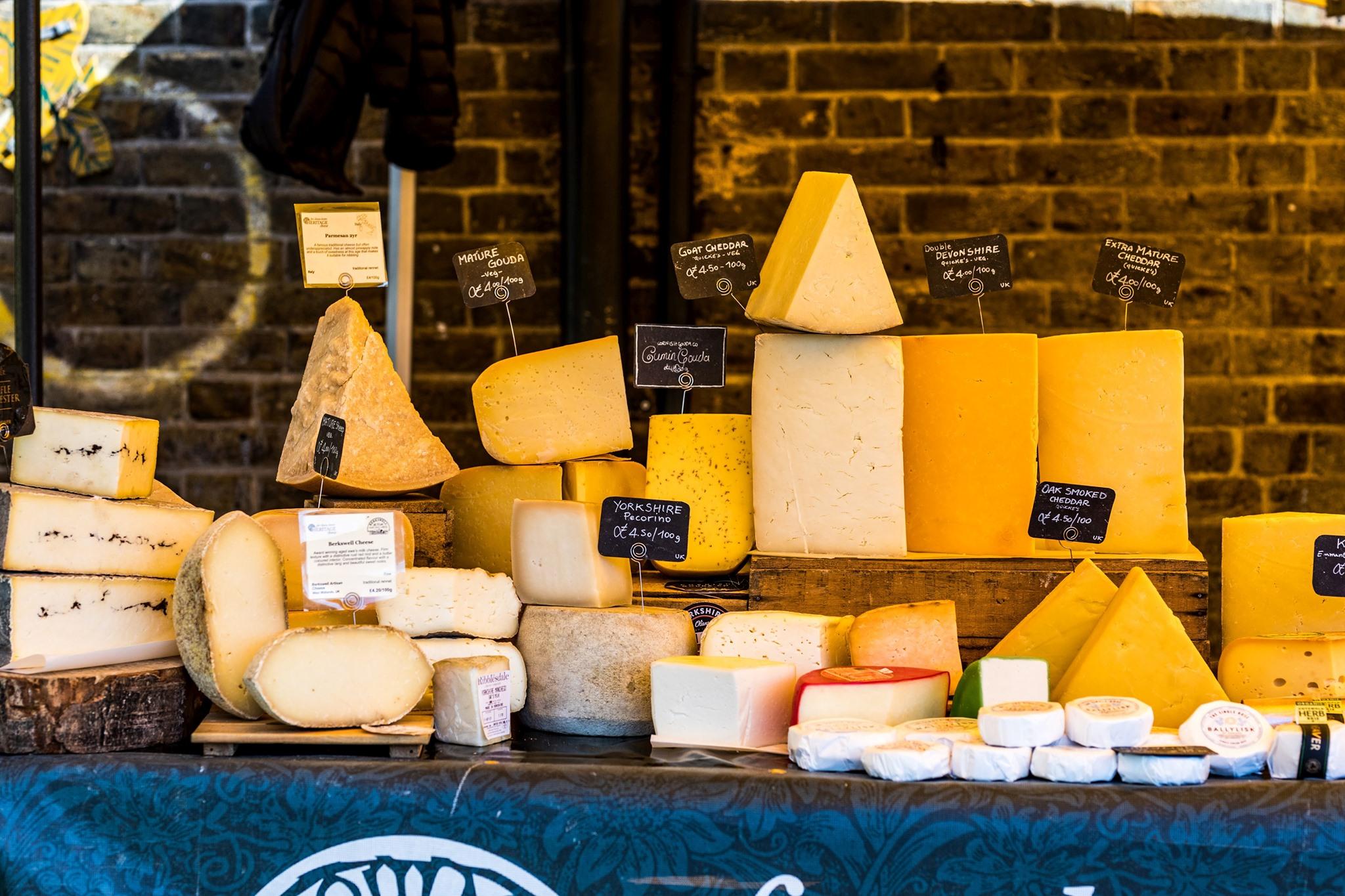
City & Country Farmers Markets (CCFM) provides a genuine cultural and culinary intervention in sprawling London, where most food arrives through opaque industrial supply chains. Since its inception in 2001, the organization has meticulously built and sustained this vital connection between urban consumers and rural producers.
Operating not merely as a commercial enterprise but as a movement, City & Country Farmers' Markets (CCFM) provides a genuine cultural and culinary intervention in sprawling London, where most food arrives through opaque industrial supply chains. Since its inception in 2001, the organization has meticulously built and sustained this vital connection between urban consumers and rural producers.
They have created a network of vibrant, community-anchored markets across the city. Their mission is both simple and profound: to foster a direct, trustworthy relationship with food, resurrecting the tradition of localized trade while championing the values of sustainability, quality, and small-scale British production. The story of CCFM is the story of a family-run business that has become an essential artery, pumping the fresh vitality of the British countryside into the dynamic pulse of London life.
The foundation of City & Country Farmers’ Markets is built on the simple but powerful ethos of a small, family-run business. Established in 2001, the organization is now celebrating over two decades of experience and dedication to the farmers’ market model—a significant achievement in the unforgiving landscape of urban commerce and retail volatility. Their longevity is a direct consequence of their adherence to a foundational principle: trust. By operating under the name "City & Country Farmers’ Markets," they explicitly state their role as the indispensable bridge between two distinct geographical and psychological domains: the densely populated, diverse City of London, and the productive, often distant Countryside of Britain.
The first CCFM market, opening its stalls in Dulwich in 2001, was not just a commercial debut; it was a testing ground for a sustainable model that prioritized transparency and quality. The family behind CCFM understood that for a farmers' market to thrive in the 21st century, it needed to offer more than novelty; it needed to offer an alternative to the anonymity of the supermarket. This required meticulous curatorial effort. Over the years, CCFM has built up what they proudly call a
"great roster of local producers and makers"
who meet the necessary standard of quality and, crucially, provenance.
The philosophy of CCFM dictates that their markets must offer a "unique balance". This balance is multifaceted: it is the equilibrium between top-quality, locally-sourced produce (the vegetables, meats, cheeses, and baked goods that are the core offering) and the complementary elements that make a market a destination—handmade crafts, street food, and vintage goods. This blending transforms the markets from mere grocery collection points into engaging, sensory-rich social events. Consumers are not just shopping; they are engaging in a cultural ritual, supporting a local maker, tasting food cooked with passion, and browsing items with a history. This holistic approach has secured CCFM's status as a fundamental community gathering point, rather than a transient retail pop-up.
The CCFM market model serves as a direct rejection of long, complicated, industrial supply chains. By facilitating direct sales, the model ensures that the overwhelming majority of the retail price goes straight back to the producer, providing fair economic returns and enabling small farmers and artisans to remain viable in an economy dominated by huge corporate buyers. For the consumer, the benefit is equally vital: access to exceptionally fresh produce, an understanding of who grew or made their food, and the opportunity to receive cooking and preparation advice directly from the experts. This direct relationship, fostered by the CCFM, is the invisible ingredient that adds value, trust, and flavour to every transaction.
The true physical manifestation of CCFM’s mission is its thriving network of five strategically located markets across London. Each market functions as a unique community hub, serving different demographics and adapting its rhythm to the local energy, while collectively creating a powerful, interconnected trading ecosystem. These markets are perfectly timed to capture the essential weekend consumer traffic, operating on both Saturdays and Sundays to maximize producer visibility and shopper convenience.
Saturdays are a key day for CCFM, with three major markets setting up their stalls across diverse corners of the city, running from 10 am to 3 pm:
Oval Farmers' Market (Saturdays, 10 am–3 pm):
Location: In the grounds of St Mark's Church, Kennington, opposite Oval Tube Station, SE11 4PW.
Significance: The Oval market benefits from a central, highly accessible location, situated directly opposite a major London Underground station. Its placement within the tranquil grounds of St Mark's Church provides a beautiful, contrastive setting—a momentary retreat from the hustle and bustle of Kennington. This location makes it a magnet for residents across South London and an easy destination for tourists interested in authentic, local London culture. The historic church setting adds a layer of continuity and tradition to the act of food shopping, reinforcing the sense of timeless community trade.
Stepney Market (Saturdays, 10 am–3 pm):
Location: At Stepney City Farm, E1 3DG.
Significance: This market boasts a powerful symbiotic relationship with its location. Stepney City Farm is itself a vital piece of East London's urban ecology, connecting city-dwellers to farming and nature. By hosting the market here, CCFM reinforces the farm's mission and creates a tangible link between the local agricultural efforts (however small) and the broader network of country producers. The E1 postcode market serves one of London’s most diverse and rapidly evolving populations, ensuring that access to high-quality, traceable produce is available across different communities, making it a critical point for food education and community engagement in East London.
Telegraph Hill Market (Saturdays, 10 am–3 pm):
Location: In Telegraph Hill (lower park), on the corner of Erlanger and Arbuthnot Roads, SE14 5LS.
Significance: Located within the verdant space of Telegraph Hill's lower park, this market is deeply rooted in the residential community of South East London. Its setting in a park corner provides a relaxed, family-friendly atmosphere. This CCFM market perfectly embodies the organization’s role as a neighborhood anchor, offering a focused selection of produce, crafts, and street food that caters specifically to the local area's weekend needs, transforming a corner of a park into a vibrant trading post.
The rhythm shifts on Sunday, with the focus moving to two expansive, high-traffic locations that capitalize on the traditional weekend leisure time, inviting visitors to shop and linger.
Alexandra Palace Farmers' Market (Every Sunday, 10 am–3 pm):
Location: Alternating between Alexandra Palace Park, N10 3TG, OR Campsbourne School, N8 7AF.
The Deep Dive Example: The Alexandra Palace market is perhaps the most logistically complex and highest-profile of the CCFM locations, and a prime example of their adaptability. Operating every Sunday from 10 am to 3 pm, this market's unique challenge and strength lie in its alternating locations.
When held at Alexandra Palace Park (N10 3TG), the market benefits from the massive footfall generated by the iconic venue, drawing visitors from across North London and beyond who are visiting the park, attending events, or simply enjoying the panoramic views. This location demands a large, diverse roster of stallholders to satisfy the broad audience.
When held at Campsbourne School (N8 7AF), the market adopts a more intimate, hyper-local feel, serving the immediate neighbourhood of Crouch End and its surrounding areas. This dual-location approach ensures year-round consistency, guaranteeing that the market can operate regardless of major events at the Palace or weather-related issues in the open parkland. CCFM’s careful management of this rotation, requiring clear communication with both producers and consumers (as indicated by the website's instruction to "see market page for date/location info"), is a testament to their operational excellence and commitment to maintaining a dependable market presence. It ensures that the residents of North London can rely on CCFM for their weekly supply of fresh, traceable food, solidifying the market’s status as a critical Sunday destination.
Herne Hill Market (Every Sunday, 10 am–4 pm):
Location: Railton Road, outside Herne Hill Station, SE24 0JN.
Significance: The Herne Hill market has the distinction of a slightly longer operating time, running until 4 pm, and boasts an immensely desirable location right outside the train station on Railton Road. This position ensures exceptional visibility and foot traffic, capturing both local residents and those travelling by rail. The market is an integral part of the South London cultural scene, known for its lively atmosphere and high density of independent businesses nearby. It is a quintessential metropolitan farmers’ market, demonstrating how CCFM successfully integrates quality agricultural trade directly into the urban transit and cultural landscape.
The comprehensive network—running every Saturday and Sunday, spanning diverse London postcodes from E1 to N10, and from SE11 to SE24—shows CCFM's widespread commitment to decentralizing food access and building community anchors across the capital, not just in privileged pockets.
The impact of City & Country Farmers’ Markets extends far beyond the simple act of selling goods; it functions as a powerful, multi-layered tool for economic, social, and environmental change within the London context. The markets are not simply retail spaces; they are catalysts for healthier, more connected communities.
The most direct and measurable impact of CCFM is economic. The organization’s mission is focused on supporting a “great roster of local producers and makers.” In the contemporary food industry, small farms and artisan producers often struggle to compete with the bulk buying power and logistical efficiency of major supermarket chains. CCFM provides a vital, high-value alternative sales channel.
By selling directly to the London consumer, producers eliminate the layers of middlemen (wholesalers, distributors, retailers) that typically absorb a significant portion of the profit margin. This direct-to-consumer model ensures that the maximum return on investment goes back to the farmer or maker. This financial stability is crucial for investment, innovation, and, most importantly, the survival of small, often family-run, agricultural businesses in the country. Without markets like CCFM, many specialist producers of high-quality, rare-breed, or organic goods would simply not be economically viable. The London consumer, in turn, acts as a patron of this critical ecosystem, using their purchasing power to vote for a diverse, sustainable future for British food production.
In an increasingly digitized and isolated society, CCFM markets serve a crucial social function. They are intentional spaces for communal gathering, where transactions are based on conversation, advice, and human connection, rather than hurried anonymity. These markets provide a genuine third space—neither work nor home—where diverse elements of the community converge.
For the consumer, the market is a site of food education. Shoppers can ask a farmer about the specific variety of potato they are buying, learn when the runner beans were picked, or discover the best way to prepare a cut of meat directly from the butcher who raised the animal. This immediacy demystifies food production and restores a respect for the labor and seasonal realities of farming. This direct knowledge empowers consumers to make more informed, healthier choices, bridging the knowledge gap that often exists between the city and the farm. Furthermore, the inclusion of street food and vintage/craft stalls ensures the markets are destinations for families and friends, turning a utilitarian shopping trip into a delightful, enriching weekend excursion.
The short supply chain model promoted by CCFM has inherent environmental benefits. By transporting goods directly from the farm to the London market (City & Country), the markets dramatically reduce the 'food miles' associated with multi-stage distribution networks. This reduction in transportation and storage means a lower carbon footprint for the food purchased.
Furthermore, the CCFM's focus on top-quality, locally-sourced produce often encourages and showcases producers who practice higher standards of animal welfare, sustainable farming techniques, and chemical-free cultivation. Because the producer is face-to-face with the consumer, they are directly accountable for their farming practices, a system of responsibility that fosters ethical production without the need for complex, bureaucratic certifications. The consumer is betting on the character and integrity of the person selling the product, a powerful ethical dynamic that is lost in industrialized food systems.
The magic of a CCFM market is found in the sensory details that defy description but define the experience. It is the aroma of freshly baked sourdough mingling with the scent of damp earth and seasonal vegetables; the vibrant colours of heritage carrots and deep purple cabbages against the industrial backdrop of the city; the loud, friendly banter between stallholders and regular customers. This atmosphere is the product of twenty-plus years of careful curation by the CCFM family.
The consistent operation across both Saturday and Sunday indicates the organization's understanding of the modern London lifestyle, accommodating the varied schedules of its residents. The precise times—generally 10 am to 3 pm or 10 am to 4 pm—are designed to create a vibrant, intense trading window that respects the weekend commitments of both the producers, who have travelled significant distances, and the local community.
While the website currently presents its five main locations as the central focus, the history of a founding market in Dulwich and the mention of News and Events sections hint at the dynamic, adaptable nature of the organization. CCFM is constantly engaging with the changing seasons and urban calendar. This might involve organizing special events like seasonal Christmas markets, hosting cooking demonstrations, or collaborating with local chefs to showcase the produce. Such events serve to continually refresh the market’s appeal and deepen its educational and social impact.
The future role of City & Country Farmers' Markets in London is set to become even more vital. As consumer awareness of climate change and food security grows, the demand for short supply chains, traceability, and ethical sourcing will only increase. CCFM stands ready to meet this demand, armed with two decades of expertise in logistics and community management. They are not merely preserving a historic form of trade; they are future-proofing the connection between urban inhabitants and their food source. By upholding the highest standards of quality and continuing to nurture their roster of small, dedicated producers, CCFM ensures that the pulse of the British countryside will continue to beat strongly in the heart of the capital for generations to come. The markets are proof that even in a city of millions, it is possible to maintain a personal, meaningful, and trustworthy relationship with the food that sustains us.
