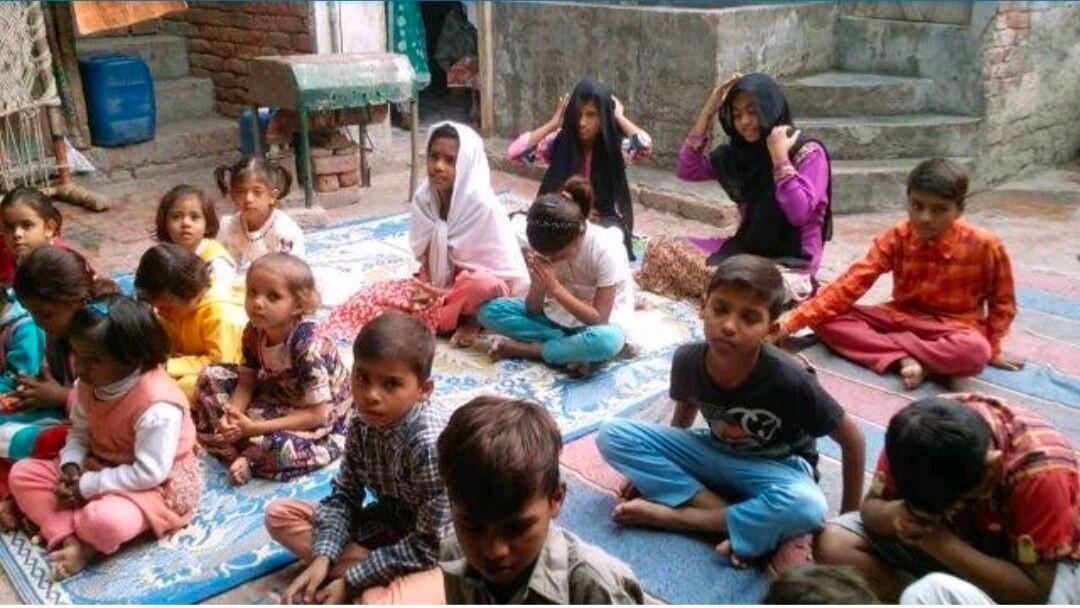
In the quiet town of Plombières, Belgium, at Rue du Vallon 7, stands an organisation with a simple yet profound mission: to provide access to education for children who are homeless. In a society where schooling is taken as a given, the homeless child often becomes invisible, slipping through the cracks of systems designed for stability. This organisation challenges that invisibility, refusing to allow a child’s housing status to determine their right to learn, grow, and belong.
Worldwide, children living in homelessness, whether in shelters, temporary accommodation, or on the margins of housing systems, face enormous educational disadvantages:
Frequently changing living arrangements lead to school disruption, repeated re-enrolment, and inconsistent attendance.
Poor housing conditions often mean children arrive at school tired, hungry, stressed, without the quiet space, support or materials to complete homework.
Schools may lack dedicated resources or systems to support children who lack stable accommodation, undermining their ability to engage fully.
In Belgium, according to child-poverty reports,
“the provision of sufficient, adjusted shelters for homeless (families with) children is necessary”
and
“compulsory education must become free”
to ensure that children in precarious housing are not left behind.
Although the specific programmes of the Plombières-based organisation are not publicly detailed, organisations with this kind of mission typically engage in the following activities:
Education is not merely academic attainment, it is a cornerstone of dignity, possibility and future stability. For children without stable homes, schooling offers:
Belgium, like many European countries, faces significant challenges in ensuring that children experiencing homelessness or housing precarity can access and benefit from education. Reports highlight that children living in temporary accommodations often arrive at school with untreated health issues, under-resourced home environments for homework and elevated stress levels, all of which impact learning.
Furthermore, the education system is increasingly called upon to act not only as an academic institution but as a “safe harbour” for children in unstable living situations, but schools are under-resourced for that extended role. Hence, organisations such as this one in Plombières fill a vital gap.
Education for children who are homelless reminds us that the right to education means far more than a desk in a classroom. For the child without a stable roof, each day of school is an act of resilience, a step against the weight of instability. When an organisation declares itself dedicated to that child, in Plombières or elsewhere, it embraces the belief that no child’s future should be determined by where they sleep at night.
In a world where housing and education systems often sit in separate silos, bridging the gap becomes moral imperative. For a child who is homeless it is not just a housing crisis, it is an educational crisis, a rights crisis, a community crisis. And the answer lies in both shelter and schooling.
The organisation at Rue du Vallon 7 represents a vital commitment: to safeguard the right of every child, including those facing homelessness, to learn, to belong, and to imagine their future. Its presence underscores that even in places where children seem invisible, caring adults, organisations and communities can offer light.
Until every child who enters school does so with the security of home behind them, and a welcoming classroom ahead, the mission remains unfinished. But organisations like this one show us that education for homeless children is not optional, it is essential.
