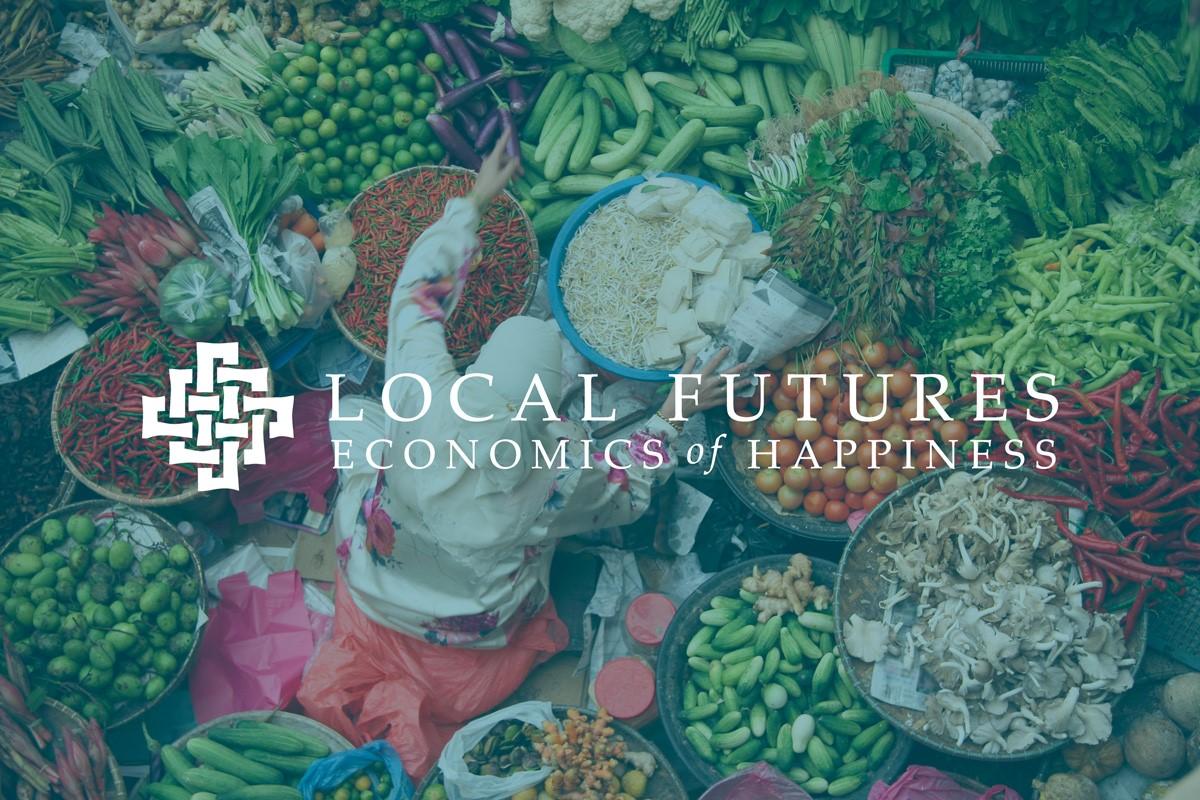
Local Futures, formerly known as the International Society for Ecology and Culture (ISEC), stands as a globally recognized non-profit organization dedicated to promoting economic localization. Founded by Helena Norberg-Hodge, the organization has spent decades analyzing the ecological, social, and psychological costs of the current system of corporate globalization. Their core mission is to shift the public and political conversation from an unquestioning acceptance of international trade and mega-corporations toward a paradigm that prioritizes local economies, community resilience, and cultural diversity.
At its heart, the work of Local Futures is a comprehensive critique of the prevailing economic narrative—the belief that infinite worldwide growth and deregulated trade are the inevitable paths to prosperity. Instead, Local Futures champions the vision of "The Economics of Happiness," a term popularized by their 2011 documentary, which argues that scaling down economic activity to the local level—from food production and energy generation to finance—is the most effective way to foster ecological regeneration, social well-being, and genuine human satisfaction. The organization operates on two parallel tracks: hands-on, place-based projects (like the pioneering work in Ladakh) and extensive worldwide education and advocacy campaigns, making it a critical voice in the contemporary dialogue about sustainability and economic justice.
The localization paradigm is not simply about going “backwards” or being anti-trade; it is a systematic, forward-looking economic strategy rooted in ecological and social principles. Local Futures identifies corporate globalization as a primary driver of interconnected crises—climate change, biodiversity loss, rising inequality, and social fragmentation—arguing that this system requires and perpetuates policies that subsidize corporate sprawl while penalizing local initiatives.
Local Futures defines corporate globalization not merely as interconnectedness, but as the systematic creation of a single, uniform worldwide market managed by transnational corporations. The organization meticulously details the perverse incentives driving this system:
Localization, in the context of Local Futures, is defined as the process of shortening the distance between production and consumption. This is a deliberate policy choice designed to favor the local over the global, but it is not isolationism. The concept is based on Scale-Linking, a critical distinction:
The shift to localization is therefore seen as a necessary structural adjustment, leveraging market forces to support diversity and resilience rather than uniformity and fragility.
One of Local Futures’ most profound contributions is moving the economic debate beyond material statistics (like GDP) to include the psychological and cultural impacts of economic structure. Helena Norberg-Hodge’s work, particularly in Ancient Futures: Learning from Ladakh and The Economics of Happiness, serves as a powerful testament to the destructive power of globalization on human identity and well-being.
Local Futures’ analysis suggests that the shift from localized, diverse economies to centralized, monocultural ones systematically undermines social cohesion. In traditional, localized communities, people inherently rely on each other for many necessities, creating dense networks of interdependence, trust, and shared identity—what sociologists call "social capital."
The organization points to mounting psychological evidence that face-to-face interaction, a sense of belonging, and meaningful work—all fostered by local economic structures—are fundamental drivers of happiness and mental health. By bringing jobs and production closer to home, localization restores human scale to daily life, making work more relevant and community more tangible. This powerful social and psychological argument elevates the localization movement from a purely environmental concern to one centered on human flourishing.
The work in Ladakh, a high-altitude desert region in the Indian Himalayas, serves as the most powerful case study and enduring symbol of Local Futures’ philosophy in action. Beginning in the mid-1970s, Helena Norberg-Hodge documented the profound changes experienced by the traditional Ladakhi culture upon its sudden exposure to modern "development."
Before external intervention, Ladakh was described as a thriving, localized ecosystem. The traditional economy was characterized by:
The arrival of modernization, through government subsidies and imported goods, quickly began to dismantle this resilient structure. Local Futures observed that:
In response, Local Futures (then ISEC) helped establish grassroots non-governmental organizations in Ladakh to protect and revitalize the local culture and economy. These initiatives focused on:
The Ladakh project provided crucial, real-world proof that rapid economic centralization can cause social and ecological trauma, even in the name of "progress," and that localization offers a practical path to healing and resilience.
Beyond case studies, Local Futures engages in major global advocacy and education to shift policy at higher levels. Their work focuses on building a global movement of localizers and providing the theoretical and practical tools needed for systemic change.
Local Futures emphasizes that localization requires systemic policy change to level the playing field against subsidized globalization. Key policy recommendations and program areas include:
As of 2025, the localization movement championed by Local Futures has gained significant relevance due to global challenges that have starkly exposed the fragility of global supply chains. The pandemic, geopolitical tensions, and accelerating climate crises have all underscored the need for resilient, place-based economies.
The localization paradigm faces several standard critiques, which Local Futures consistently addresses:
The ecological argument for localization is perhaps the most compelling in the current climate crisis. By shrinking the ecological footprint associated with transport, eliminating waste from global packaging and complex logistics, and encouraging diversified, regenerative local agriculture, localization directly addresses the drivers of environmental breakdown. It fosters an intimacy with place—an "eco-literacy"—that encourages responsible resource management and stewardship because the consequences of degradation are felt immediately.
In conclusion, Local Futures offers a profoundly relevant and actionable vision for a post-globalization world. Their decades of work—from the high-altitude deserts of Ladakh to the global advocacy stage—demonstrate that economic structure is not destiny. By focusing on the local, the organization proposes a systemic solution that simultaneously addresses the ecological crisis, the social decay, and the epidemic of modern alienation, offering a powerful blueprint for an "Economics of Happiness" rooted in resilience, diversity, and genuine human connection. The future, according to Local Futures, is small, diverse, and local.