The story of food production in the modern era is one of efficiency, consolidation, and control. In a world dominated by multinational corporations that treat genetic material as patented property, the quiet, focused work of The Real Seed Catalogue, operating from the Welsh countryside, stands as a radical counter-narrative. Far more than just a purveyor of vegetable seeds, Real Seeds represents a profound philosophy of food sovereignty, genetic resilience, and ethical land stewardship. The company’s entire operation—from the varieties it champions to its ethical sourcing policies and its foundational commitment to education—is dedicated to dismantling the industrial seed complex and empowering the home gardener to become a custodian of agricultural heritage.
At the heart of Real Seeds’ mission is a commitment to the open-pollinated (OP) seed, a genetic inheritance that carries with it not only the blueprint for growth but also the liberty for the grower to save and replant the harvest for generations. This simple distinction—the difference between a seed that breeds true and one that requires annual repurchase—is the hinge upon which the entire political economy of food rests. Real Seeds is dedicated to restoring this fundamental freedom to gardeners across the UK, arguing that the true quality of a seed is measured not in its commercial uniformity, but in its flavor, its adaptability, and the knowledge it allows a person to retain.
To understand the transformative importance of Real Seeds, one must first appreciate the landscape it seeks to reform: the industrial seed system. For over a century, but accelerating rapidly since the mid-20th century, the worldwide food supply has been systematically streamlined. This process of industrialization was driven by three key innovations that severely curtailed biodiversity and farmer independence: hybrid seeds, genetic modification (GMOs), and intellectual property (patents).
The vast majority of modern commercial vegetable seeds are F1 hybrids. These seeds are the product of crossing two distinct, inbred parent lines, resulting in a vigorous and uniform first-generation plant (the F1). While F1 hybrids offer commercial benefits—such as predictable yields and simultaneous ripening for mechanized harvesting—they are biologically designed to prevent seed saving. If a gardener saves seed from an F1 plant and replants it, the resulting F2 generation will revert unpredictably to a wide variety of parent traits, often producing poor quality or entirely sterile plants.
The rise of the F1 hybrid successfully transitioned the gardener from a farmer who held the means of production (the seed) to a consumer who must return to the marketplace every single year. This economic lock-in is the first trap of the industrial system.
The second, and more insidious, trap is the corporate control of genetics. Through mergers and acquisitions, the global seed and agrochemical industry has consolidated into a handful of colossal entities. These corporations invest heavily in patented seed technologies, including genetically modified organisms (GMOs). A patent transforms a living, naturally evolving entity into a piece of proprietary technology. Farmers or gardeners using patented seeds are bound by complex legal contracts, forbidden from saving or sharing seed, and are subject to aggressive legal scrutiny if their saved seed is found to contain patented traits.
While Real Seeds explicitly mentions its critique of GMO seeds—referencing a page titled "Why GMO seed is STUPID"—its entire focus on open-pollinated, non-hybrid varieties is a practical protest against this corporate hegemony. The fundamental flaw, in Real Seeds’ view, is that control over the seed equals control over the food supply. By providing open-pollinated seeds and comprehensive saving instructions, Real Seeds hands the genetic property rights back to the individual gardener, thereby fostering genuine food security that is independent of market fluctuations or corporate policy.
Real Seeds defines its purpose by offering an alternative rooted in ecological wisdom, sensory quality, and democratic access. The entire catalogue is a carefully curated selection of varieties chosen for traits that the industrial system has ignored: flavor, genetic robustness, and the ability to thrive in a small-scale garden setting.
The cornerstone of the Real Seeds philosophy is its dedication to traditional open-pollinated (OP) seed. An OP variety is one that relies on natural pollination by insects, wind, or self-pollination. Crucially, when an OP plant is pollinated by another plant of the same variety, the resulting seeds will grow plants that are true-to-type. This predictable inheritance means the gardener is immediately liberated from the annual seed market. Real Seeds proudly states that with their seed, there is
"no need to buy new seed every year."
They empower the customer to be a farmer in the fullest sense of the word: saving, adapting, and propagating their own lineage.
This act of saving seed is not merely a hobby; it is a critical process of local adaptation. As a seed is grown and saved repeatedly in the same location (be it a Welsh smallholding or a suburban allotment), it slowly acclimatizes to the local soil composition, microclimate, and endemic pests. Over generations, the seedstock becomes genetically fitter and more resilient, providing a living, localized hedge against environmental changes.
The quest for maximum yield in industrial agriculture has consistently compromised flavour and nutritional density. Tomatoes bred for long-distance transport and shelf life are hard, uniform, and often tasteless. Real Seeds, run by people who are themselves enthusiastic gardeners, prioritizes a quality that can never be patented: taste.
The varieties in their catalogue—be they heritage tomatoes, unusual Asian greens, or specialty beans—have been chosen based on rigorous trials and taste-tests conducted on their farm in Wales. This dedication is so absolute that their unique guarantee extends beyond germination and growth, promising a cheerful refund or replacement if the customer is
"in any way less than delighted—even including the flavour of the resulting crop."
This unprecedented guarantee underscores their focus on the culinary experience, reaffirming that the purpose of growing food is joy, flavor, and sustenance, not just industrial mass-production.
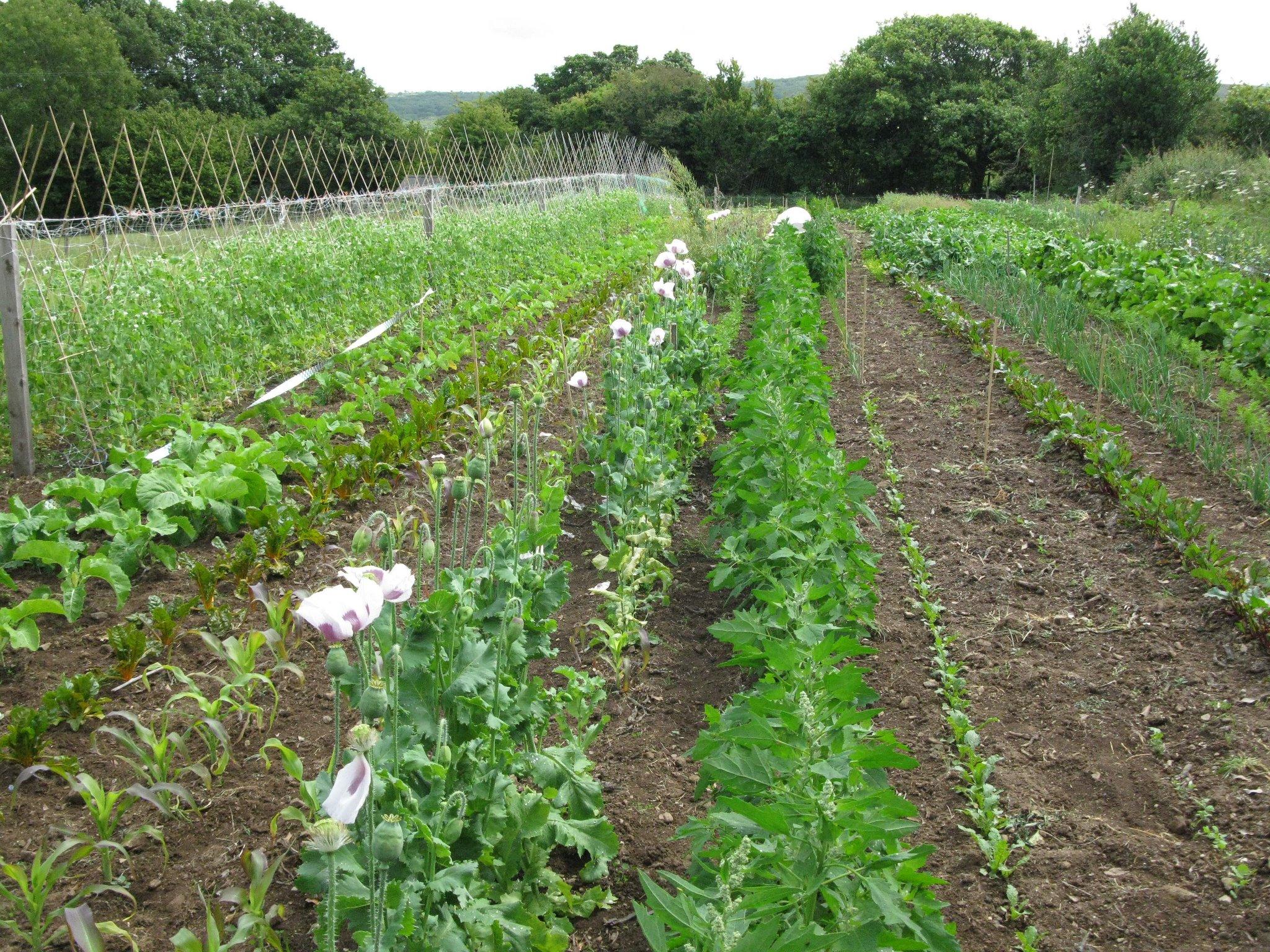
An unusually high proportion of their stock—approximately 50% of the seed they sell—is grown directly on their farm in Wales. This is a monumental effort in the seed business, where most large companies rely solely on international wholesale brokers. By growing half their own stock, Real Seeds maintains an exceptional level of quality control, genetic authenticity, and local adaptation. It ensures that the seeds are perfectly suited to the UK environmental, have excellent germination rates, and represent the best examples of the varieties advertised.
The remaining seeds are sourced only from "trustworthy seed companies," adhering to a stringent set of ethical guidelines that govern both their business practices and their political commitments, forming the final and perhaps most distinctive layer of their philosophy.
The mission of Real Seeds is fundamentally educational. They understand that open-pollinated seeds are useless without the knowledge required to save them correctly. Therefore, the company positions itself not as a seller of commodities, but as a curator of knowledge and skills.
The industrial system has fostered the perception that seed saving is a complex, arcane art reserved for agricultural professionals. Real Seeds actively debunks this myth through mass education. They have distributed over 400,000 sets of free home seed-saving instructions, making the process accessible and simple for the average home grower.
Their website and catalogues are comprehensive teaching resources, featuring detailed guides on:
Isolation cages: Essential for preventing cross-pollination in open-pollinated varieties.
Threshing and winnowing: The traditional processes of separating seed from chaff.
DIY templates: Guides for making one's own seed packets.
Crop-specific advice: Detailed methods for tricky crops like peppers, chillies, and brassicas.
By offering this knowledge freely, Real Seeds actively encourages the gardener to exit the cycle of annual seed consumption and become a fully participatory member of the food system. This act of saving and sharing seed becomes a quiet, yet radical, act of decolonization—reclaiming the means of production from corporate hands.
The commitment to democratizing seed access is also reflected in their social initiatives. The provision of Low-waged / Unwaged Gardeners' Seed Packs demonstrates a commitment to food equality, ensuring that economic hardship does not preclude individuals from the restorative practice of growing their own food. This approach highlights the political conviction that gardening should be a right, not a privilege, and that access to high-quality, non-proprietary seed is essential for building resilient communities.
Furthermore, the company embraces its history and community through its operational choices. The use of two of the last existing Ballard-Brown seed packing machines, intricate devices built over a century ago, is a powerful symbol. It connects the high-tech reality of modern seed logistics with the enduring tradition of craft, accuracy, and human scale. These traditional methods, coupled with their modern powering by 100% renewable electricity, perfectly synthesize their philosophy: they are a progressive, future-focused business built on the solid foundations of sustainable, human-scale practices.
Real Seeds is a great resource for anyone who is interested in growing their own food. They even supply tips for people wanting to start growing their own food for the first time! They offer a wide range of seeds, and they are committed to providing high-quality, non-hybrid seeds that are grown in a sustainable way.
The most salient and publicly articulated expression of Real Seeds’ integrated ethical framework lies in its sourcing policy, which extends the principles of environmental sustainability and social justice into the worldwide arena.
