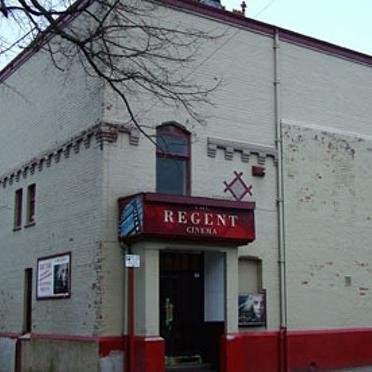
The Regent Cinema is an independent single-screen picture house located on Stockport Road in Marple, Greater Manchester (historically Cheshire). Housed inside a Victorian building constructed in 1878, it stands as one of the oldest operational entertainment structures in the North West of England, preserving traditional 20th-century cinema culture—complete with balcony seating, a proscenium arch, and a mid-film intermission.
The structure housing the Regent Cinema has undergone four major transformations over nearly 150 years, reflecting the changing social, industrial, and cultural landscape of Marple.
                  [ 1878: The Union Rooms ]
   Constructed by Thomas Carver (Co-owner of Hollins Mill)
   Purpose: Coffee tavern, mission chapel, library, & reading room
                              │
                              ▼
                [ 1931: The Regent Cinema ]
   Acquired by Marple Cinema Co. / Designed by R.W. Samson
   Grand Opening: August 22, 1931 (545-seat picture house)
                              │
                              ▼
            [ 1968–1969: Closure & Family Rescue ]
   Closed Aug 1968; saved from bingo conversion by the Lillis family
   Refurbished to 252 seats; reopened November 1969
                              │
                              ▼
                [ 2013–Present: Modern Era ]
   Conversion to Barco Digital Projection (2013)
   Leadership transition to Edwin Gnanaprakasam (2020)
In the late 19th century, Marple was a thriving industrial mill town driven by the cotton trade and canal transport networks. Thomas Carver, a wealthy local philanthropist and co-owner of the giant Hollins Mill, commissioned the construction of The Union Rooms on Stockport Road in 1878.
Carver was an ardent supporter of the Temperance Movement, a social campaign urging working-class families to abstain from alcohol. The Union Rooms was designed as an alternative community hub for mill workers:
Ground Floor: A non-alcoholic coffee tavern and community meeting hall.
Upper Level: A public reading room, library, and mission chapel.
Social Impact: It provided educational materials, lectures, and social gatherings away from local public houses, forming a cornerstone of Marple's Victorian social welfare infrastructure.
By the late 1920s, silent films had transitioned into "talkies," creating a massive demand for purpose-built and converted motion picture venues across the UK.
In early 1931, the Marple Cinema Company acquired the Union Rooms and hired R.W. Samson, a prominent theatre and cinema architect from Sheffield, to redesign the building's interior. Samson gutted the interior to install a sloping floor, a proscenium arch for the screen, and an elevated balcony circle.
Opening Night: On Monday, August 22, 1931, the venue opened its doors as The Regent Cinema.
First Screened Feature: The opening film was the British musical comedy Sunshine Susie, starring Renate Müller and Jack Hulbert.
Original Capacity: The auditorium accommodated 545 patrons packed tightly into wooden stalls on the ground floor and a balcony circle above.
Throughout the 1940s and 1950s, the Regent was a central entertainment hub for Marple. However, by the late 1960s, the arrival of domestic television, falling attendance across single-screen cinemas, and rising maintenance costs led to financial hardship.
The original operating company closed the Regent on August 3, 1968. Soon after, developers submitted planning applications to turn the building into a commercial bingo hall—a fate that claimed hundreds of historic UK picture houses during that decade. The local Marple Urban District Council and community residents strongly opposed the change, leading to a temporary stalemate over the building's future.
In 1969, James Lillis and his son David Lillis purchased the building, determined to keep it operating as a cinema. They undertook a massive renovation project that defined the venue's modern character:
Comfort Over Capacity: They removed the cramped 545 seats, reducing the capacity to 252 seats to provide generous legroom and install plush, high-backed seating.
Balcony Upgrades: The circle was re-fitted with classic "Pullman" style velvet armchairs.
Interior Restoration: The decorative plasterwork around the proscenium arch and ceiling was restored and painted in classic jewel tones.
The Regent reopened in November 1969 and was managed by David Lillis for over 50 years, earning him legendary status among local residents and UK cinema historians.
Unlike modern multiplexes that rely on automated, sterile projection and high-turnover seating, The Regent preserves the traditional, theatrical ritual of mid-century cinema going.
┌──────────────────────────────────────────────────────────────────────────────┐
│                    Key Features of The Regent Experience                     │
├──────────────────────────┬───────────────────────────────────────────────────┤
│ Architectural Layout     │ Victorian red-brick facade; 2-tier auditorium     │
│                          │ (Stalls and Circle Balcony with ~250 seats)       │
├──────────────────────────┼───────────────────────────────────────────────────┤
│ The Mid-Film Interval    │ A 10-minute intermission halfway through every    │
│                          │ feature screening                                 │
├──────────────────────────┼───────────────────────────────────────────────────┤
│ Traditional Concessions  │ Usherettes selling ice cream directly from trays  │
│                          │ in the aisles during intermissions                │
├──────────────────────────┼───────────────────────────────────────────────────┤
│ Modern Projection Tech   │ Barco Digital Cinema Projection & Dolby Surround, │
│                          │ with legacy 35mm equipment preserved              │
└──────────────────────────┴───────────────────────────────────────────────────┘
One of the Regent's most famous traditions is the continuation of the 10-minute interval during feature films:
Roughly halfway through the movie, the screen dims, the house lights rise gently, and organ or retro instrumental music plays over the sound system.
Staff members (usherettes) walk to the front of both the Stalls and the Circle Balcony holding illuminated ice-cream trays, allowing patrons to buy tubs of ice cream, sweets, and drinks without leaving their seats.
This feature offers a nostalgic nod to classic 1950s cinema while providing families and elderly patrons with a comfortable break during long modern blockbusters.
For over 80 years, the projection booth at the Regent operated mechanical 35mm film reels. However, between 2011 and 2013, Hollywood studios phased out physical 35mm film distribution in favor of encrypted Digital Cinema Packages (DCP).
To ensure the venue did not go dark, the cinema invested in a state-of-the-art Barco Digital Cinema Projection System and upgraded digital audio processing. The first major feature projected digitally at the Regent was Steven Spielberg's Lincoln in early 2013.
In April 2020, after more than 50 years at the helm, David Lillis retired. Ownership and day-to-day management transitioned to Edwin Gnanaprakasam, who had worked alongside Lillis at the venue since 2014.
Gnanaprakasam has introduced key modernizations while preserving the cinema's heritage:
Digital Integration: Launched the official online booking engine, enabling advance ticket sales and seat selection while retaining cash-at-the-door options for local regulars.
Community-First Pricing: Maintained ticket prices significantly lower than corporate multiplex chains in nearby Stockport or Manchester city center.
Diverse Programming: Balancing current blockbusters and family releases with special screenings, classic film nights, and local community events.
┌──────────────────────────────────────────────────────────────────────────┐
│                            The Regent Cinema                             │
├───────────────────┬──────────────────────────────────────────────────────┤
│ Website           │ https://regentmarple.co.uk                           │
│ Address           │ Stockport Road, Marple, Greater Manchester, SK6 6BD  │
│ Key Dates         │ 1878 (Built as Union Rooms)                          │
│                   │ August 22, 1931 (Opened as Regent Cinema)            │
│                   │ November 1969 (Reopened by Lillis Family)            │
│ Key Leaders       │ Thomas Carver, James & David Lillis, Edwin           │
│                   │ Gnanaprakasam                                        │
│ Capacity          │ ~252 seats across Stalls and Balcony Circle          │
└───────────────────┴──────────────────────────────────────────────────────┘
Through Victorian philanthropy, 1930s cinema architecture, and five decades of independent family stewardship, The Regent Cinema in Marple stands as a preserved piece of British film history that continues to entertain audiences today.
