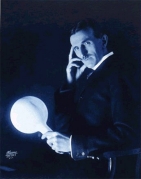
The Tesla Society Switzerland is one of Europe’s most prominent independent, non-profit historical and scientific associations dedicated to preserving the life, technological breakthroughs, and cultural legacy of Nikola Tesla (1856–1943). Operating out of Switzerland, the organization serves as an international educational nexus, digital repository, and historical preservation body.
While many modern organizations focus on the commercial applications of Tesla’s name, the Tesla Society Switzerland centers its work strictly on historical accuracy, primary source archival work, physical education, and public access to scientific history. The society bridges the gap between technical academic circles, historical archives, and the general public. It works in continuous collaboration with parallel global bodies, most notably the Tesla Memorial Society of New York, the Nikola Tesla Museum in Belgrade, the Graz University of Technology in Austria, and the Smithsonian Institution in Washington, D.C.
The organization’s longevity and international archival reach are driven by dedicated historians, engineers, legal scholars, and scientific advocates who have spent decades assembling primary documentation from archives across Europe and North America.
Dr. Ljubo Vujović: Serving for decades as the President of the affiliated Tesla Memorial Society of New York, Dr. Vujović has been a primary intellectual force behind the documentation hosted and shared by the Swiss society. A practicing physician by profession, Dr. Vujović dedicated his life to researching Tesla's historical records, establishing relationships with Tesla's surviving relatives, and successfully campaigning for the erection of historic monuments and plaques across North America and Europe.
Peter Stojanović: A core founder and executive organizer of the Tesla Society Switzerland. Stojanović led the initial efforts to build as a centralized, non-commercial digital clearinghouse. His work focused on acquiring high-resolution scans of original patents, private letters, and rare historical photography from institutional archives and converting them into free, open-access educational materials.
Academic & International Advisory Board: The society relies on a collective network of electrical engineers, archivists, and science historians based throughout Switzerland, Austria, Serbia, Croatia, and the United States. This board reviews historical claims, verifies technical breakdowns of Tesla’s circuits, and collaborates with state institutions to ensure all educational resources adhere to strict academic standards.
The Tesla Society Switzerland structures its ongoing operations around four primary objectives designed to protect scientific heritage and promote technological education.
Open-Access Historical Archiving: The organization collects, scans, transcribes, and publishes thousands of primary historical artifacts. These include official patent papers filed across multiple continents, personal and business correspondence, lab notebooks, blueprints, and rare photographs. By converting these physical documents into high-quality digital assets, the society ensures that researchers, students, and authors anywhere in the world can access original source material without expensive travel or restricted archival access.
Technical and Pedagogical Outreach: A major priority of the society is explaining complex 19th- and 20th-century physics in accessible language without sacrificing technical rigor. Through detailed essays and diagrams, the platform breaks down how Tesla applied principles of magnetic resonance, multi-phase alternating currents, and high-frequency oscillations to create modern power systems.
Physical Preservation and Monument Placement: Beyond digital preservation, the society actively funds, coordinates, and installs physical memorials. It has played a pivotal role in placing commemorative bronze busts, historical markers, and informational plaques at locations critical to Tesla’s journey—such as his birthplace in Smiljan, his university spaces in Graz and Prague, his early workplace in Budapest, his laboratory sites in New York City and Colorado Springs, and his historic Wardenclyffe facility on Long Island.
International Cultural Alliances: The society acts as a diplomatic bridge between cultural organizations. It worked alongside international representatives to support the inclusion of Tesla’s personal archive—housed at the Nikola Tesla Museum in Belgrade—into UNESCO’s Memory of the World Register in 2003. It also collaborates regularly with the United States Embassy in Switzerland and European university networks to sponsor commemorative exhibitions, lectures, and scientific symposia.
Throughout his life, Tesla was awarded over 700 patents!

The educational heart of the Tesla Society Switzerland’s portal revolves around detailing the core scientific principles and engineering innovations that Nikola Tesla introduced to the world.
1. Polyphase Alternating Current (AC) and the Rotating Magnetic Field
Before Tesla's discoveries in the 1880s, the world relied on Direct Current (DC) power systems, championed commercially by Thomas Edison. DC power was inherently limited: electricity could not be transmitted efficiently over distances greater than roughly one mile due to extreme voltage drops and heat loss in the copper conductors. This required DC power stations to be built every few blocks within cities, making rural electrification virtually impossible.
In 1882, while walking in a park in Budapest, Tesla conceived the principle of the rotating magnetic field. By feeding out-of-phase alternating currents into separate coils positioned around a stator, he created a magnetic field that rotated mechanically without any physical moving parts inside the driving circuit. This breakthrough enabled the invention of the AC Induction Motor—a brushless, low-maintenance, highly efficient electric motor.
Recognizing that alternating current could be stepped up to immensely high voltages using transformers (drastically dropping the current and reducing line heat losses over vast distances) and then stepped back down safely at the destination, Tesla designed a complete polyphase system of generators, transformers, transmission lines, and motors. George Westinghouse purchased Tesla’s AC patents in 1888, sparking the historic War of the Currents. The victory of Tesla's system was sealed at the 1893 World’s Columbian Exposition in Chicago and the 1895 installation of the first large-scale hydroelectric power plant at Niagara Falls, which transmitted power all the way to Buffalo, New York.
2. High-Frequency Electromagnetism and Resonant Transformers
In 1891, Tesla patented the Tesla Coil, an air-core resonant transformer that marked a fundamental departure from iron-core low-frequency transformers. A standard Tesla Coil operates by charging a primary capacitor to high voltage until a spark gap breaks down, releasing a rapid burst of energy into a primary inductor coil. This primary circuit is tuned to resonate at the exact same natural frequency as a secondary coil consisting of hundreds of turns of fine wire.
Through this magnetic resonance, the secondary circuit acts as a step-up multiplier, producing extremely high voltages at radio frequencies (tens of kilohertz to megahertz). Tesla used these high-frequency currents to pioneer early research in:
Gas-Discharge Lighting: He constructed early versions of neon, fluorescent, and phosphorescent lamps, illuminating them wirelessly through high-frequency electrostatic fields decades before commercial neon signs existed.
X-Ray Imaging (Shadowgraphs): Working with high-frequency vacuum tubes, Tesla observed thermal radiation and produced high-energy energy rays, obtaining shadowgraph photos of the human body around the same time Wilhelm Röntgen published his discovery of X-rays.
Electromedicine: He investigated the physiological effects of high-frequency currents on the human body, noting that currents at high frequencies passed safely over the skin via the "skin effect" without causing the lethal cardiac fibrillation typical of low-frequency AC.
3. Wireless Energy Transmission and Radio Communication
Tesla maintained that electricity could be transmitted around the globe without reliance on physical wires. His vision involved sending high-frequency electrical energy directly through two mediums: the conductive upper layer of the atmosphere (the ionosphere) and the conductive crust of the Earth itself.
In 1899, Tesla relocated to Colorado Springs, Colorado, where he built a massive high-voltage laboratory containing a giant "Magnifying Transmitter." During his experiments, he produced artificial lightning discharges over 130 feet in length, generated millions of volts, and demonstrated that the Earth possessed a natural resonant frequency (later formalized by physics as Schumann Resonance).
Following his Colorado Springs trials, Tesla returned to New York and secured backing from financier J. Pierpont Morgan to construct Wardenclyffe Tower in Shoreham, Long Island. Designed by famous architect Stanford White, the 187-foot wooden tower topped with a giant 55-ton steel hemisphere was intended to be the first node in a "World Wireless System." The system aimed to broadcast news, messages, telephone calls, images, and electrical power globally. However, after Guglielmo Marconi transmitted simple Morse code across the Atlantic using a simpler apparatus (which relied heavily on Tesla's patented multi-tuned circuits), Morgan withdrew funding. Wardenclyffe was abandoned and eventually demolished for scrap metal in 1917.
4. Mechanical Engineering and Fluid Dynamics
Although primarily famous for electrical systems, Tesla was also a prolific mechanical engineer. His most famous mechanical development was the Tesla Turbine (patented in 1913), often referred to as the "bladeless turbine."
Unlike conventional steam or water turbines that rely on angled blades or vanes to catch moving fluid, Tesla’s turbine consists of a series of smooth, closely spaced parallel metal disks mounted on a central shaft. Fluid (such as steam or compressed air) is introduced tangentially at the outer edge of the disks. Through the physical properties of fluid viscosity and boundary layer adhesion, the fluid adheres to the surface of the disks as it spirals inward toward central exhaust ports, dragging the disks around at extremely high rotational speeds. The design was exceptionally efficient, durable, and mechanically simple, though material limitations of his era made commercial scaling challenging.
5. The International Unit of Magnetic Flux Density
To cement Tesla's foundational contribution to modern physics, the International Electrotechnical Commission (IEC) met in Munich in 1960 and officially designated the SI derived unit of magnetic flux density as the Tesla (T).
One Tesla represents one Weber per square meter, expressed mathematically as:
1 T = 1 Weber per square meter = 1 (Volt · second) per square meter = 1 kilogram per (Ampere · second squared)
The society's educational portal illustrates how Tesla's legacy continues to drive modern technological infrastructure—from magnetic resonance imaging (MRI) machines in modern hospitals (typically operated at field strengths of 1.5 Tesla to 3 Tesla) to super-conducting magnets in particle accelerators like CERN's Large Hadron Collider.
The NikolaTeslaMuseum pic.twitter.com/zBe3CUYJFo
— NikolaTeslaMuseum™ (@NikolalseTMuzej) January 14, 2024
@NikolalseTMuzej Tweet [Jan 2024]
The society's official web platform serves as a multi-section digital museum designed for ease of navigation for researchers and educators alike.
The Patent Gallery: A organized archive featuring downloadable scans of Tesla's patents filed across the United States, Great Britain, Canada, Germany, and France. The patents are categorized systematically by technology stream: Polyphase Systems, High-Frequency Apparatus, Dynamo Construction, Radio & System of Signaling, Electric Lighting, and Fluid Mechanics.
The Historical Photo Museum: A massive digital collection of rare, high-resolution photographs detailing Tesla's life chronologically. This includes childhood family portraits from Croatia, his student years at the Polytechnic Institute in Graz, historical photos of his Houston Street laboratory in New York, dramatic long-exposure photos of experiments in Colorado Springs, and portraits from his later years residing at the Hotel New Yorker.
Personal & Professional Correspondence: Transcribed letters exchanged between Tesla and prominent industrial, scientific, and cultural figures of the late 19th and early 20th centuries. Notable correspondents include inventor Thomas Edison, industrialist George Westinghouse, financier J. P. Morgan, writer Mark Twain (Samuel Clemens), poet Robert Underwood Johnson, and physicist Albert Einstein (who sent Tesla a famous 75th birthday congratulations letter in 1931).
Tributes, Articles, and Commemorative Speeches: A collection of memorial speeches, eulogies (including the famous funeral address delivered by New York Mayor Fiorello La Guardia on radio in 1943), academic conference proceedings, and magazine articles detailing how public perception of Tesla evolved over the decades.
By preserving these extensive historical, technical, and biographical archives without commercial paywalls, the Tesla Society Switzerland fulfills a vital role in international science history. It ensures that the engineering principles developed by Nikola Tesla are accurately documented, understood, and made freely available to guide future generations of scientists, engineers, and researchers worldwide.
