TreeStation

TreeStation: From Gorton to Beyond

TreeStation is a pioneering social enterprise and a Society for the Benefit of the Community, headquartered in the heart of Manchester. It stands as a powerful, living example of how a business can be built on a triple bottom line: a commitment to social, environmental, and economic well-being. Far from a simple firewood merchant, TreeStation is a cooperative-owned hub that has, since its inception, dedicated itself to transforming a local problem—the underutilization of urban wood waste—into a comprehensive and sustainable solution for the entire region.

The Vision and Founding Story

The genesis of TreeStation dates back to 2003, when Phil Benn began a sole-trader business named Ecos, focusing on sustainable treework and firewood. It was through this work that a stark reality became apparent: a vast and valuable local resource—wood from tree surgery and woodland management—was being wasted, often sent to landfill or simply left to rot. At the same time, the UK market for timber and wood fuel was heavily reliant on imports, with significant environmental costs from transportation and unsustainable harvesting.

Recognizing this critical inefficiency, Benn and a small group of like-minded individuals began to formulate a new business model. The "TreeStation project" began to take shape in 2006, evolving from a simple idea into a formal enterprise. In 2008, Greater Manchester TreeStation (GMTS Ltd) was officially incorporated as a company limited by guarantee with not-for-profit social enterprise rules. The founders' vision was to create a local, closed-loop economy for wood, ensuring that every piece of timber was used to its highest potential. This ethos was formalized in 2012 when the organization changed its constitution to become a Society for the Benefit of the Community, a structure that perfectly aligned with its democratic and ethical principles.

The early years were a period of significant growth and investment. In 2009, TreeStation was awarded a substantial grant, which enabled them to purchase essential plant and machinery. By 2011, they had secured a single, unified site in West Gorton, simplifying logistics and increasing efficiency. This was followed by a series of successful share offers to the community, raising crucial capital from over a hundred new members who became co-owners of the enterprise. This financial model of community shares not only provided the necessary funds for expansion but also deeply embedded the organization in the very community it served, making its members stakeholders in its success.

The Business Model: Making Wood Work

TreeStation's operations are a masterclass in sustainability and waste reduction. Their business model is built around a series of interconnected services and products that ensure nothing is wasted. The process begins with their treework and woodland management services, which are themselves revenue streams. These services, performed for both domestic and commercial clients, provide the raw "feedstock" for their other products.

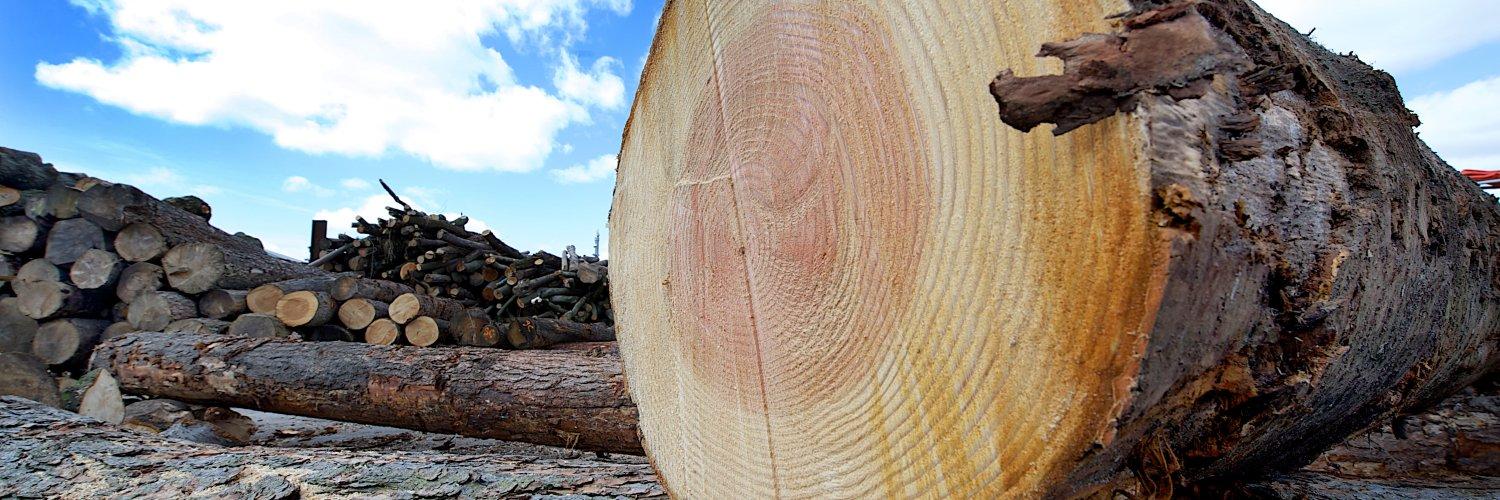
Once the green timber arrives at their yard, it is meticulously processed. A key innovation in their process is the use of a high-specification metal detector to remove any foreign matter, such as nails or fencing wire, that might be embedded in urban-grown trees. The timber is then carefully assessed and milled on a professional Woodmizer bandsaw. From there, the wood is either air-dried or placed in their in-house kiln, which is powered by a biomass boiler fueled by their own woodchip—a perfect example of their circular economy model. This integrated system ensures that they are not reliant on fossil fuels for their drying process, further reducing their footprint.

The end products are all designed to replace imported or unsustainable alternatives:

  • Biomass woodchip: A primary product for renewable energy heating systems, sourced from species unsuitable for firewood.
  • Firewood and kindling: Sourced, processed, and dried on-site to provide a local and sustainable heat source for homes.
  • Sawn timber: They offer a variety of planks and bespoke items for local joiners, carpenters, and craftspeople, providing a valuable and ethical alternative to imported timber.

Impact Beyond Business: A Force for Community and Environment

TreeStation's commitment to social and environmental values is what truly sets it apart. The organization's social value is embedded in every decision it makes. Their commitment to a triple bottom line is not just rhetoric; it is reflected in tangible actions and partnerships.

One of their most significant contributions is their Community Benefit Scheme, which provides free or heavily discounted timber and expertise to local projects. While specific project names are often not widely publicized to protect community privacy, their collaborations have included supporting various local initiatives such as:

  • Community gardens and food growing projects: Providing materials for raised beds, pergolas, and compost.
  • Educational initiatives: Supplying schools with wood for outdoor classrooms, playgrounds, and nature-based learning.
  • Environmental landscaping: Contributing to the creation of green spaces, wildlife habitats, and urban woodland projects.

Beyond these projects, TreeStation is also a major supporter of the local economy. They are committed to paying their staff at least the Living Wage and providing fair employment opportunities. Their business model inherently supports other small, local businesses, from the joiners who use their timber to the ethical suppliers they partner with.

The environmental impact is equally impressive. By operating a circular, local economy for wood, they prevent valuable timber from being wasted, save on the emissions of long-distance transport, and contribute to the reduction of methane gas from wood rotting in landfill. This makes them a vital player in wider ethical sustainability goals and a leader in the urban forestry sector.

In summary, TreeStation is more than a business; it is a community asset. Its journey from a single-person operation to a cooperative-owned enterprise is a powerful story of vision, community action, and the unwavering belief that a more sustainable and equitable economy is not just possible, but is already being built from the ground up, one tree at a time.

Find Us

Address
Vaughan St, Manchester M12 5FQ, UK
Phone
0161 231 3333
Email
info@treestation.co.uk
When in the Course of human events, it becomes necessary for one people to dissolve the political bands which have connected them with another, and to assume among the powers of the earth, the separate and equal station to which the Laws of Nature and of Nature's God entitle them, a decent respect to the opinions of mankind requires that they should declare the causes which impel them to the separation.
GLOBAL GATHERINGSSOCIAL IMPACTONLINE FUNDRAISINGCONTACT

Subscribe

* indicates required
linkedin facebook pinterest youtube rss twitter instagram facebook-blank rss-blank linkedin-blank pinterest youtube twitter instagram